Reconditioning Reflections: The Player I Couldn't Help….
At 24, I thought a structured training program, hard work, and accountability could solve a struggling professional hockey player's problems. Nearly 20 years later, I look back on that experience with a very different perspective. A personal reflection on my first year with the Hamilton Bulldogs, the lessons I learned, and why understanding the person behind the symptoms matters as much as the problems we can see.
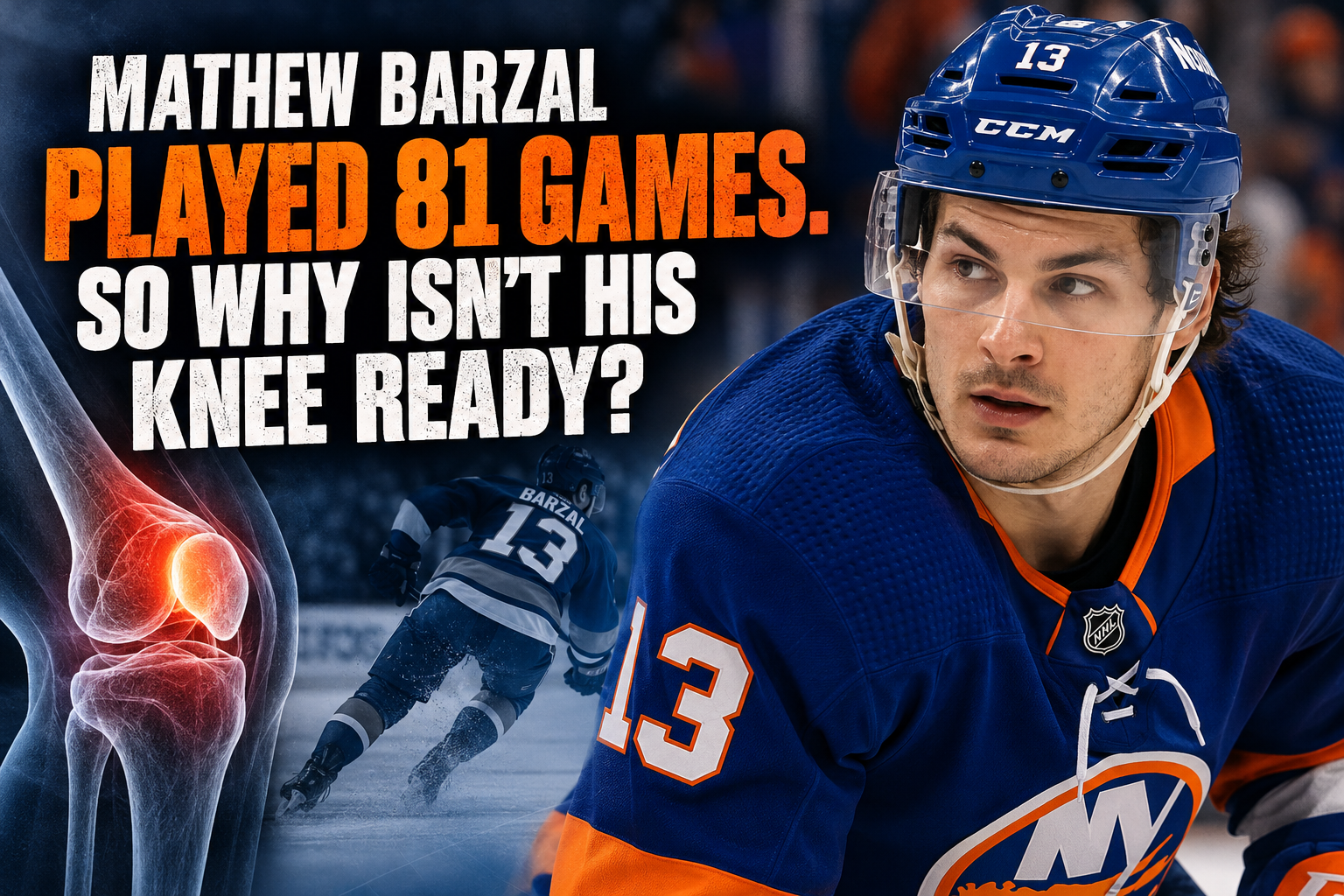
Mathew Barzal Played 81 Games. So Why Isn't His Knee Ready?
Mathew Barzal returned from knee surgery to play 81 NHL games and score 72 points. Yet more than 20 months after his injury, he's still sidelined by recurring knee inflammation. A closer look at his recovery raises important questions about persistent dysfunction, load tolerance and the difference between being cleared to play and being fully recovered.
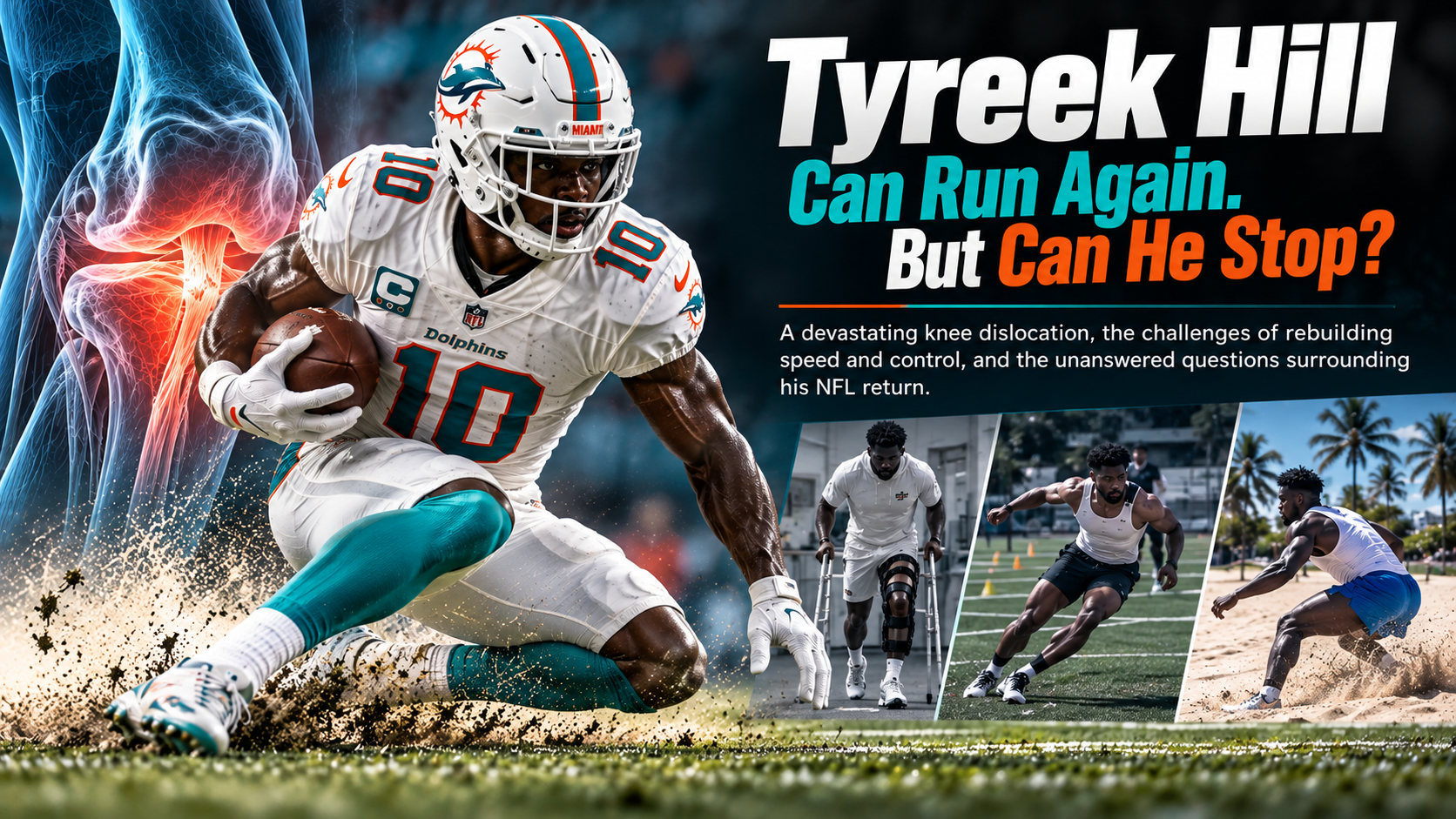
Tyreek Hill Can Run Again. But Can He Stop?
Tyreek Hill is running again following a devastating knee dislocation. But does his rehabilitation footage reveal lingering deficits in deceleration, neuromuscular control or possible nerve involvement? A closer look at his recovery and the challenges of returning to elite NFL performance.
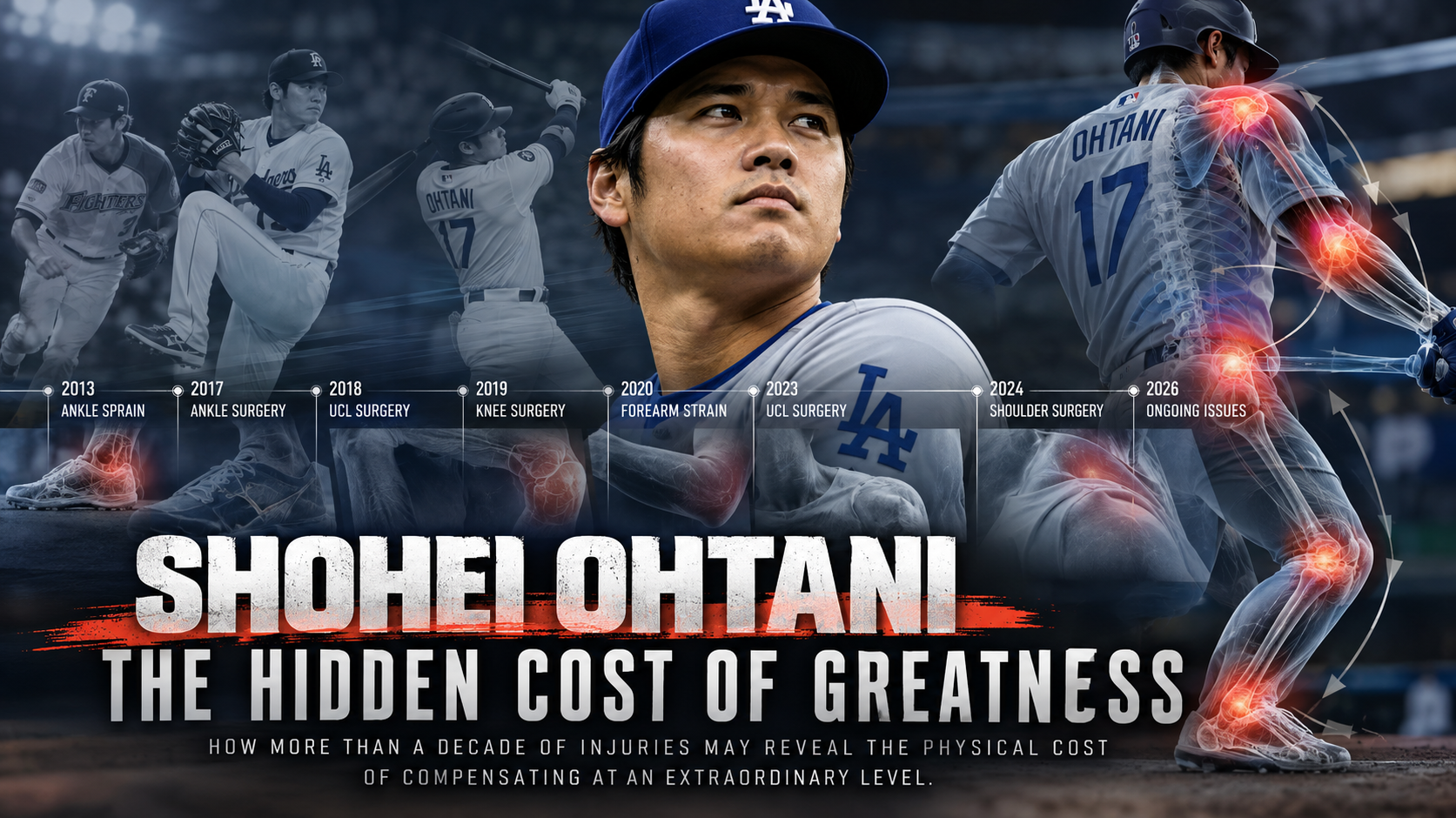
Shohei Ohtani: The Hidden Cost of Greatness
Shohei Ohtani has defied expectations throughout his career. But behind his extraordinary performance lies more than a decade of injuries, surgeries and recurring physical problems. Could his remarkable ability to compensate be masking persistent movement dysfunction? A closer look at his injury history reveals a pattern that raises important questions about recovery, biomechanics and the hidden cost of greatness.
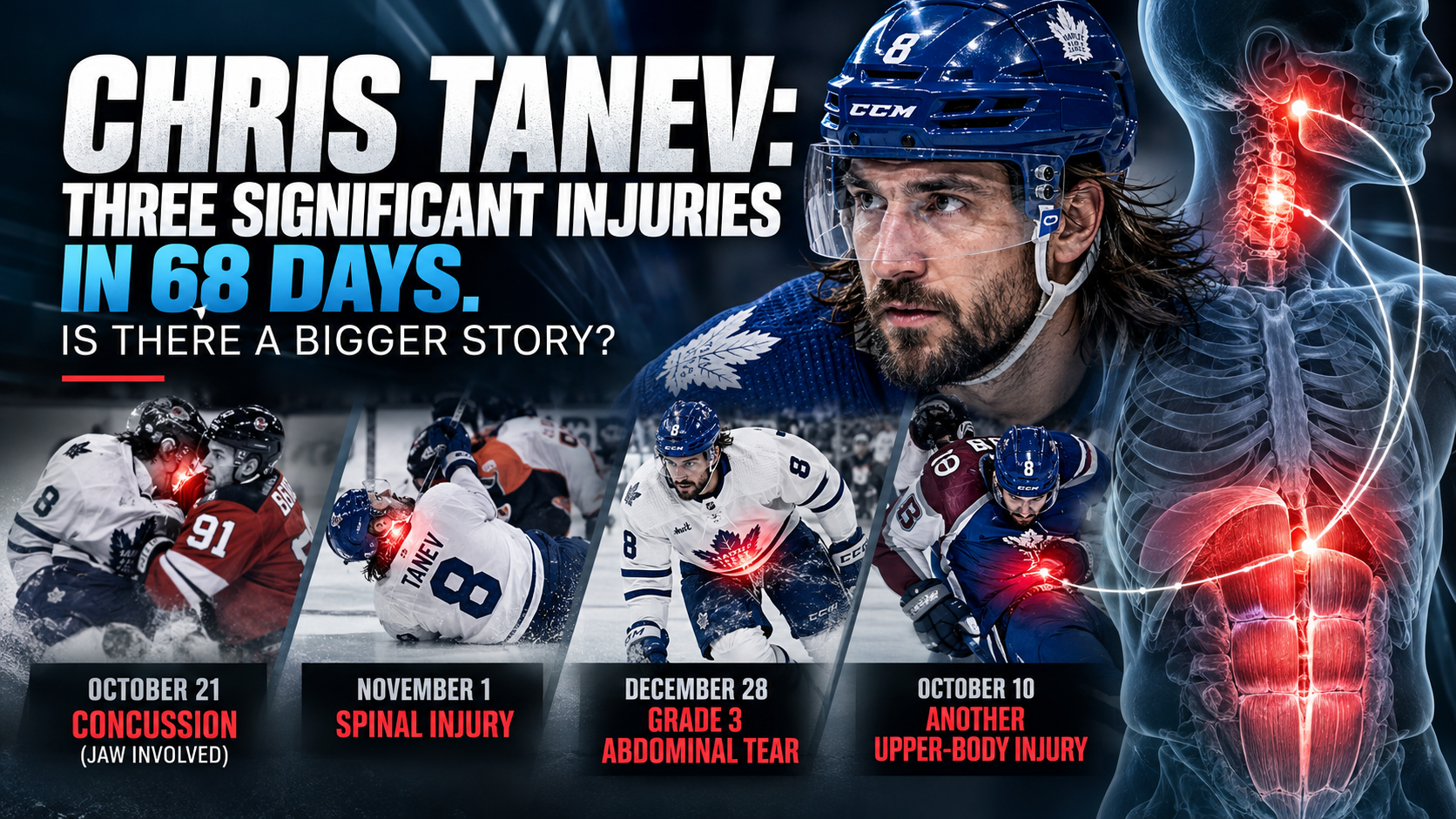
Chris Tanev: Three Significant Injuries in 68 Days. Is There a Bigger Story?
Three significant injuries in 68 days. A concussion, a spinal injury, and a Grade 3 abdominal tear during an ordinary skating stride. Now another upper-body injury.
Could Chris Tanev's injuries be connected? A closer look at the relationship between the jaw, cervical spine, diaphragm and abdominal wall raises important questions about compensation, altered movement mechanics and why returning to play doesn't always mean fully recovering.
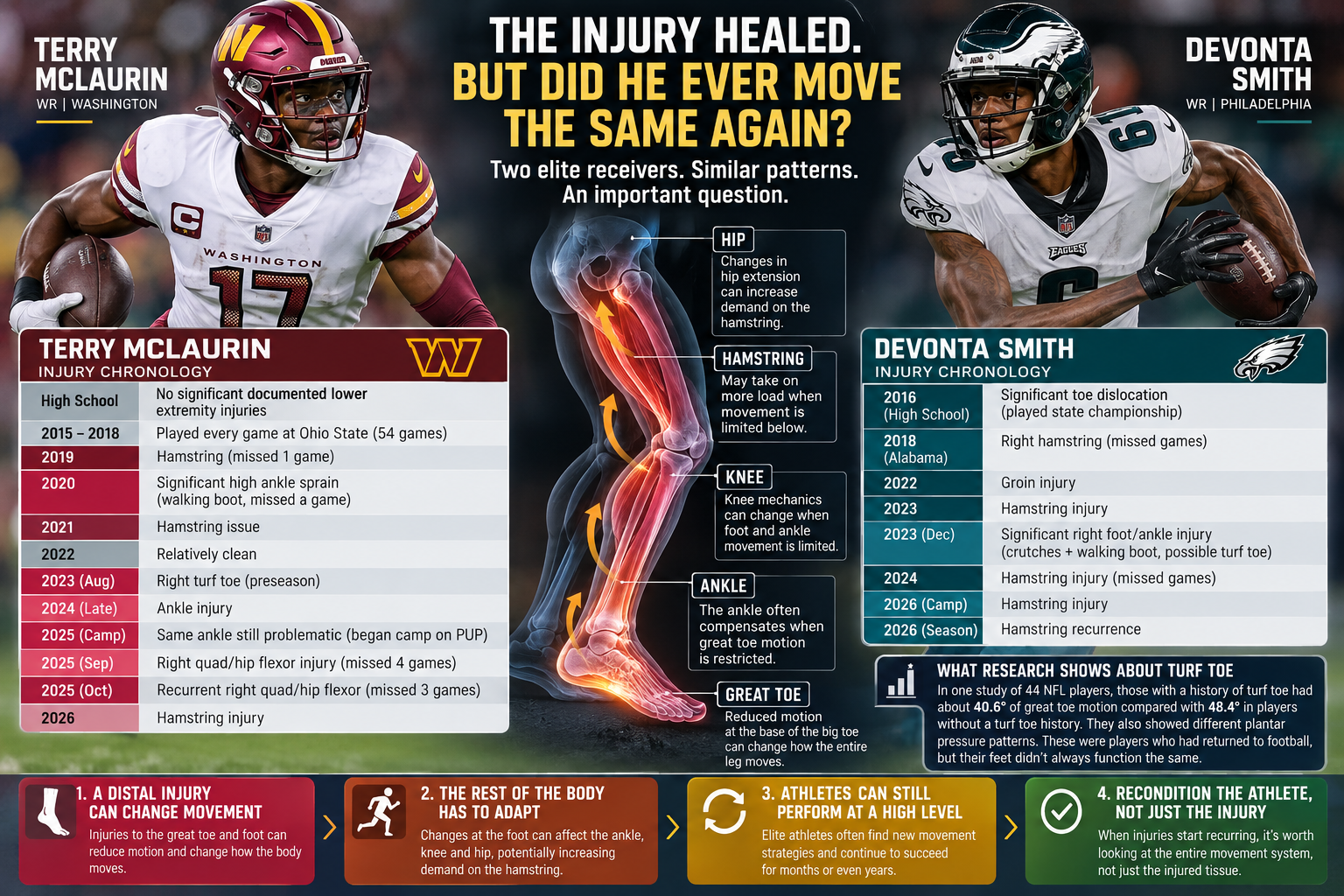
The Injury Healed. But Did the Athlete Ever Move the Same Again?
Terry McLaurin and DeVonta Smith were remarkably durable young athletes. As their careers progressed, both accumulated significant toe, foot and ankle injuries followed by recurring soft tissue problems higher up the leg. That doesn’t prove the injuries are connected, but research shows that turf toe can leave lasting changes in great toe motion and how the foot loads the ground. If the injury healed but movement changed, could the hamstring eventually become the victim of a problem that started somewhere else?
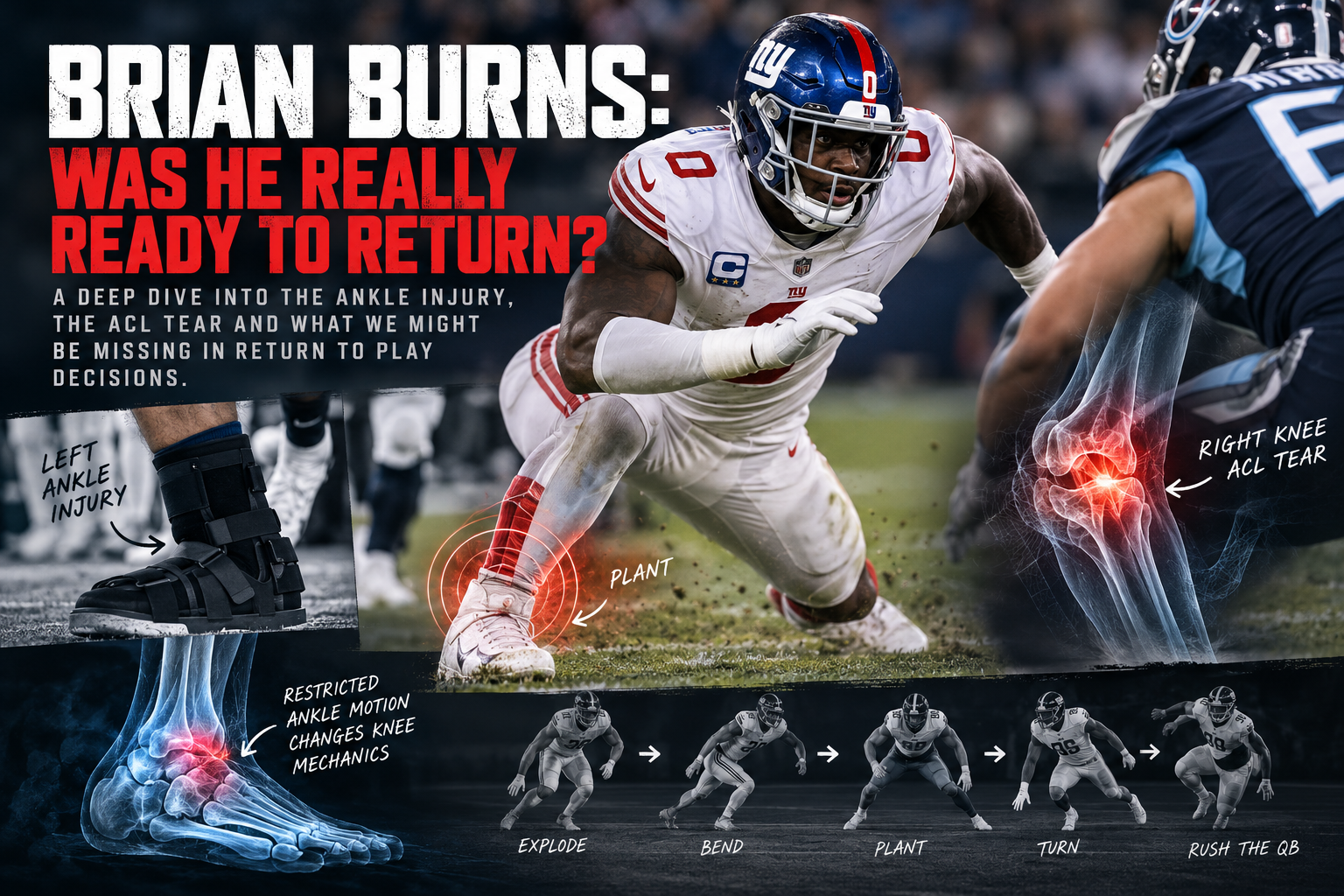
Brian Burns: Was He Really Ready to Return?
Six days after suffering a left ankle injury, Giants edge rusher Brian Burns returned to play and tore his right ACL. Could restricted ankle mobility, previous injuries and altered movement mechanics have contributed? A closer look at his injury history, the research and the questions surrounding his return to play.

Are We Hiring Reconditioning Specialists, or Filling Positions With Credentials?
As professional sport becomes increasingly driven by credentials, data and technology, are we overlooking the practical skills required to recondition an athlete? Drawing on more than 20 years in and around professional sport, I explore why assessment, hands-on treatment and movement reconditioning must work together, and why a designation alone doesn't define a skilled practitioner.

The 49ers' Injury Problem: What If We're Asking the Wrong Questions?
For nearly a decade, injuries have repeatedly shaped the San Francisco 49ers’ seasons. But what if the bigger question isn’t who got hurt, but why the problem keeps returning? A look at what it might take to investigate injuries from every angle and address them systemically.
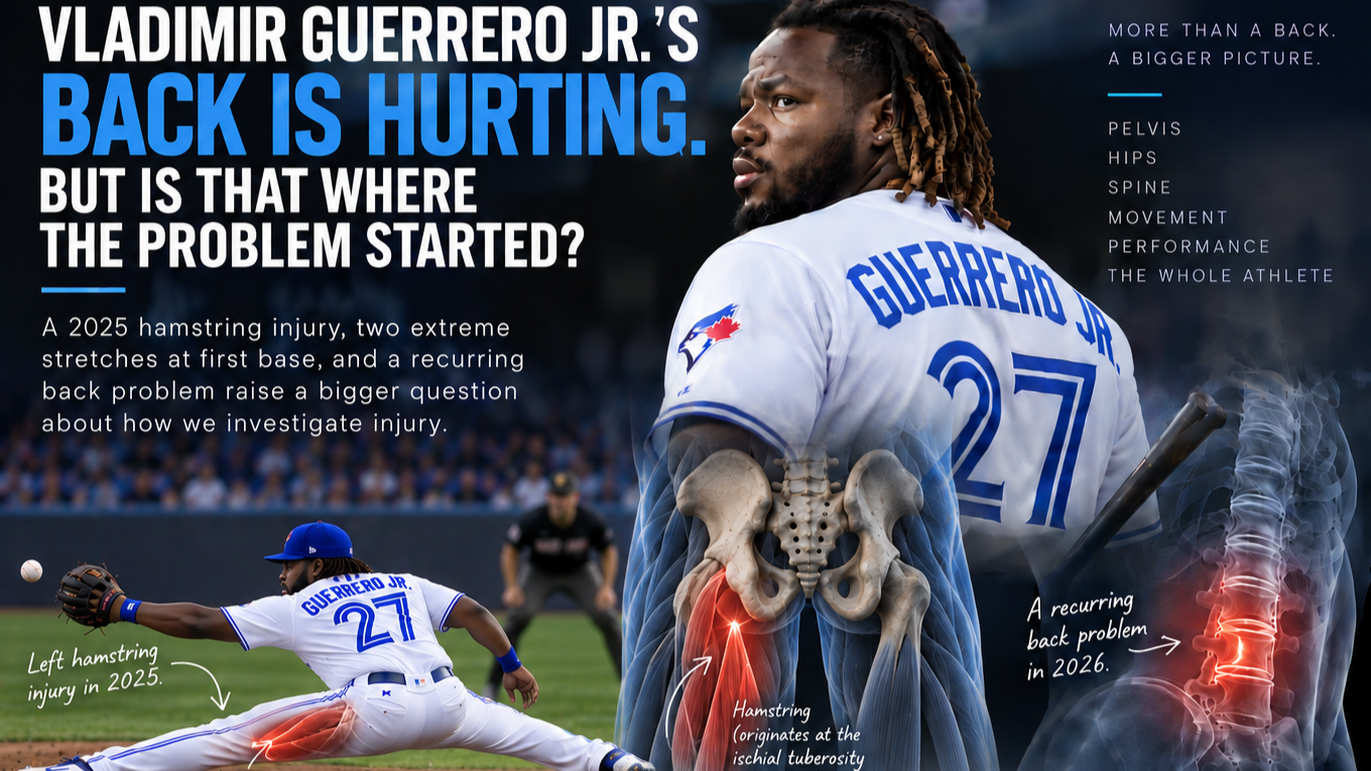
Vladimir Guerrero Jr.’s Back Keeps Talking. Are We Listening to the Wrong Body Part?
Vladimir Guerrero Jr.’s back is hurting again. But what if the story didn’t start with his back? A 2025 left hamstring injury, repeated extreme stretches at first base and recurring lower-back symptoms raise a bigger question: are we treating where athletes hurt, or understanding why they hurt?

The Longer I Practice, the More I Question What I Know
After more than 20 years working with athletes, I’ve learned that understanding an injury is only part of understanding the person. A reflection on how experience changed the questions I ask, the way I approach recovery, and what reconditioning means to me today.
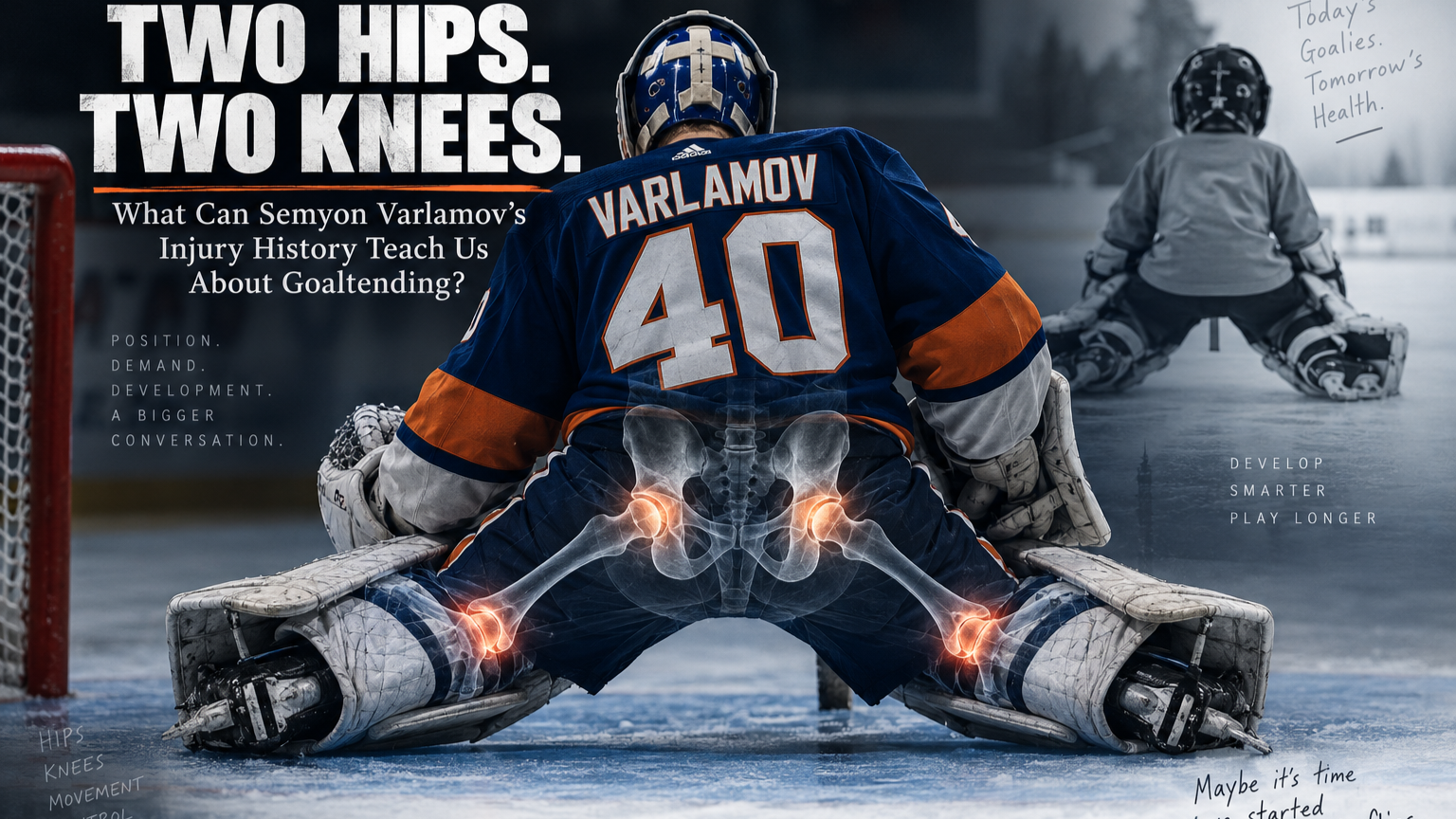
Two Hips. Two Knees. What Can Semyon Varlamov’s Injury History Teach Us About Goaltending?
Two hips. Two knees. Semyon Varlamov’s remarkable return after bilateral partial knee replacements raises a bigger question about the demands of modern goaltending. From hip surgery and motor control to accumulated trauma and thousands of butterfly repetitions, his story may offer an important lesson—not just for NHL goalies, but for how we develop young goalies in the first place.
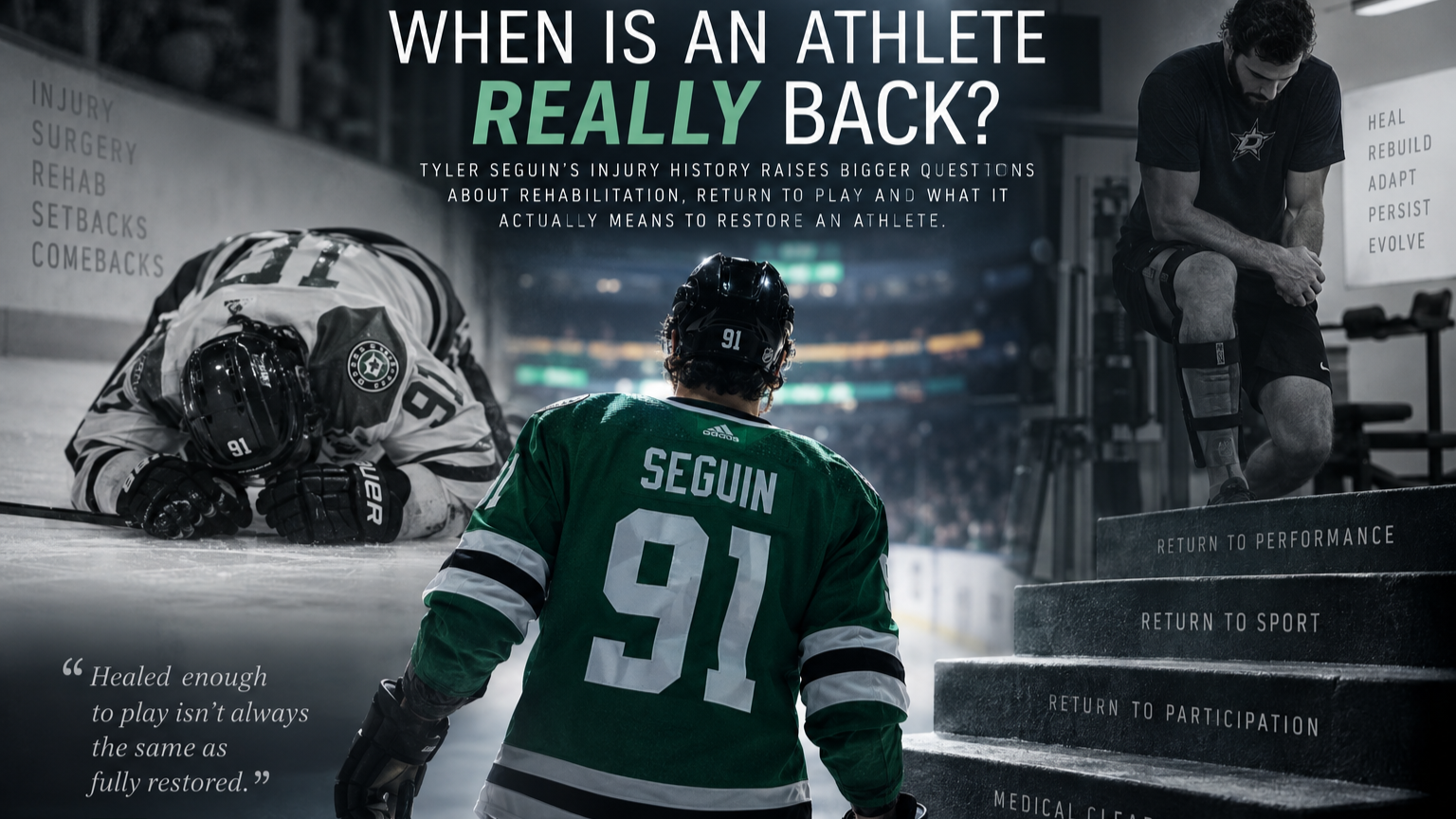
When Is an Athlete Really Back?
Tyler Seguin has spent more than 15 years navigating injuries, surgeries and rehabilitation at the highest level of professional hockey. His latest ACL reconstruction raises a bigger question: when an athlete is medically cleared to return, how much of the original system has actually been restored? And in professional sport, is there really enough time to find out?

Novak Djokovic’s Mysterious Health Problem: Is Age Really the Problem?
At 39, it is easy to say age is finally catching up with Novak Djokovic. But what if age is not the problem? What if it has simply reduced his ability to compensate for something that has been there all along? His history of gut symptoms, heat intolerance and sudden energy crashes raises a deeper question about the gut, brain and autonomic nervous system.
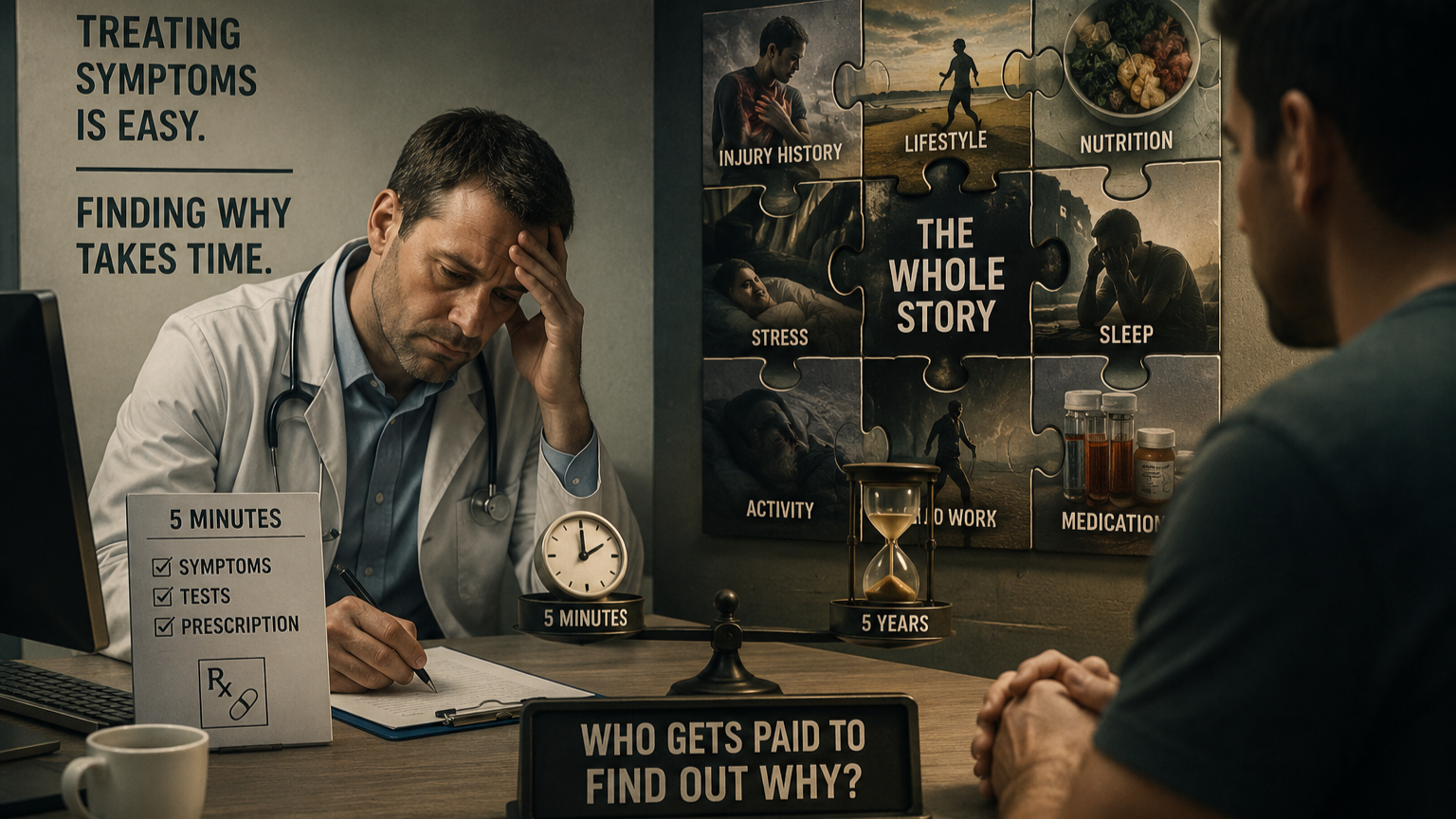
Who Gets Paid to Find Out Why?
Why do so many people move through healthcare treating one symptom after another without ever understanding why the problem started? The issue may not be a lack of knowledge or good doctors. It may be a system that simply doesn’t provide the time, resources or financial incentive required to connect the dots.

George Kittle’s Achilles Rupture: Did the Story Start Six Years Earlier?
George Kittle’s Achilles rupture didn’t happen in isolation. His injury history raises an important question: did the story begin years earlier with a right cuboid fracture and the compensations that followed?

Why Childbirth Belongs in an Athlete’s Injury History
Should childbirth be part of an athlete’s injury history? Faith Kipyegon’s story raises important questions about how pregnancy, C-section, pelvic changes, hormones and emotional stress may influence the body long after an athlete returns to performance.