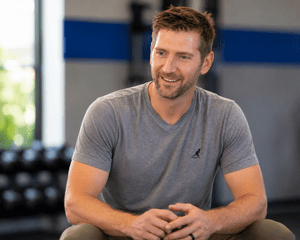
A Return to Sharing: Why I’m Talking About Reconditioning Again
For more than 20 years, my career has revolved around injury, unresolved pain, rehabilitation and performance.
I’ve had the opportunity to work in professional and Olympic sport as well as private practice — from professional athletes trying to return to competition to people simply trying to understand why they continue to hurt despite treatment.
Along the way, I developed my own way of looking at these cases — an approach I call Reconditioning.
But for the last several years, I haven’t shared much of that publicly.
Stepping Away
I took a long break and stepped away from much of the professional world I had known.
Like a lot of businesses, ours was hit hard during COVID. My business partner eventually moved on, and around the same time, life outside of work became much more important.
My wife’s mom was diagnosed with cancer, and we made the decision to leave British Columbia and move closer to family so we could spend time with her and help care for her.
For a while, career plans, building a business and maintaining a presence online simply weren’t the priority.
Family was.
That season changed a lot for me. It gave me time away from the professional sports and clinical environments that had consumed much of my adult life, and it gave me a different perspective on what I wanted the next part of my career to look like.
What didn’t change was my curiosity about the work.
The Questions Never Went Away
I’ve always been drawn to the difficult cases.
The athlete who has technically recovered but still doesn’t feel right.
The person who has lived with pain for months or years despite trying multiple treatments.
The recurring injury that keeps coming back.
The person who has been told everything looks normal, yet knows something still isn’t right.
Those are the cases that make you ask different questions.
What are we missing?
My background has always crossed disciplines. I’ve worked in athletic therapy and athletic training, strength and conditioning, manual osteopathy.
Over time, I stopped seeing those as separate approaches.
I became more interested in how they connect.
Pain and injury don’t always exist in isolation. Previous injuries, structural restrictions, movement strategies, strength deficits, training load and psychosocial components all influence what we’re seeing today.
Sometimes where someone hurts is where the problem is.
Sometimes it isn’t.
Someone can also finish rehabilitation, regain strength and be medically cleared while still knowing they aren’t moving, feeling or performing the way they should.
That space between pain, injury, rehabilitation and performance is where I’ve spent much of my career.
I call it Reconditioning.
Why I’m Sharing Again
I’ve been doing this work for more than two decades, but I’ve shared surprisingly little of how I actually think about it.
I’d like to change that.
Reconditioning Hub Insights will be a place for me to explore the things I’ve learned, the things I question and the problems I still find interesting.
I’ll break down complex and recurring injuries. I’ll explore unresolved pain and why some problems persist despite treatment. I’ll look at injury histories and movement patterns. And I’ll discuss manual therapy, rehabilitation, strength and conditioning, return to sport and performance and how those pieces can work together rather than existing in separate silos.
I’ll also look at cases from professional sport and ask the questions I would be asking if that athlete were standing in front of me.
Not to diagnose someone from a distance or pretend there is one answer to every injury or pain problem.
There isn’t.
The goal is to look at these situations through a different lens and hopefully create better conversations around how we approach pain, injury and performance.
After more than 20 years doing this work, I’ve become less interested in having all the answers and more interested in asking better questions.
Why did this happen?
What is keeping it from resolving?
What are we missing?
And most importantly:
How do we help someone move beyond managing the problem and get back to doing what matters to them?
That’s Reconditioning.
And that’s what I plan to explore here.